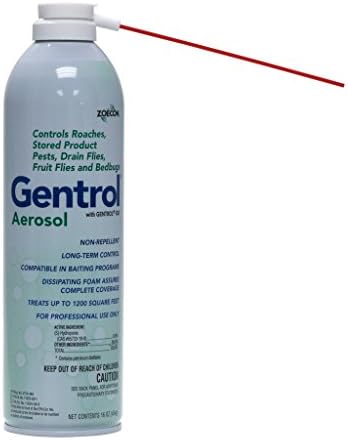
AerosolGentrol Aerosol, 2-can packOur growth regulator in an aerosol foam, packed in two cans for treating a commercial galley or a multi-room residential layout.
$42.95

We formulate one active across four applications. The regulator does not chase the adults walking the floor. It works on the brood instead, so the room runs out of breeders a generation later.

One active compound runs through the whole line. The room decides whether you need an aerosol foam, a mixed tank, a quiet station, or contact help for crawling adults.
A 16 oz can of foaming hydroprene with an extension tube for crack and crevice work, in singles, pairs and cases.
2 formatsLiquid hydroprene for the tank at one ounce per gallon, in premeasured 1 oz bottles or a route-sized pint.
1 formatAdhesive-backed stations that release hydroprene into enclosed spaces, twenty to the box, about 75 square feet each.
3 formatsThe same hydroprene paired with a contact ingredient, as an 18 oz aerosol, a case, or the EC3 pint concentrate.
Nothing dramatic happens by evening. A growth regulator relies on time and the biology of the pest.
Immature nymphs and larvae pick up the hydroprene from surfaces and air currents inside voids. They feed normally while carrying the material.
The regulator blocks normal development as the insect grows. Each molt goes wrong, leaving the pest sterile and unable to reach true breeding form.
Old adults die off on their own timeline. Without a fresh generation replacing them, the population collapses and the room goes quiet.
Start from what you found on the glue board or behind the sink. The specific insect points straight to the formulation and placement.
Our line splits four ways. Here is one pack from each branch, so the formats sit side by side before you open a shelf and read through the sizes.
Home kitchens, bakeries, grocery backrooms, warehouses. The label carries the full site list, and the room you treat has to be on it.
Specific tank mix ratios and unit counts appear directly on the container label. The summary below reflects those printed instructions.
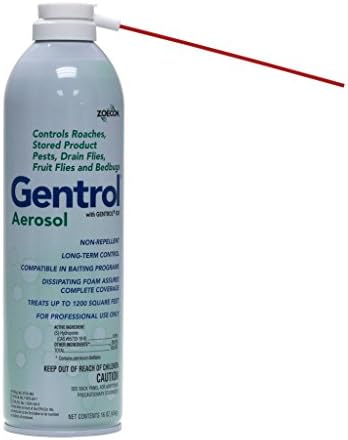
The foam goes on visible and sits wet for a moment, so any missed gap shows right away. It dissipates on its own without leaving a heavy film. The straw directs the active deep behind appliances and into baseboard seams, where the regulator settles into the dark voids where immatures hide.
★ 4.5 out of 5$24.64The figure comes from our retail partner and can shift between visits. The live listing has the final say.
Tell us what you see by the baseboard and where the problem started. We narrow the line to the formulation that fits the space.
Open the match toolThe four formulations stand together in a single catalog. You can see the aerosol, the concentrate, the stations, and the Complete line without searching across separate listings.
We keep the line focused on one active and four ways to apply it. The figures beside each bottle show the dilution and coverage.
Start from the room and the pest. The formulation follows both, and the label decides where each one may go. An open pantry shelf takes a different tool than a deep wall void behind a dish line. Our active settles into the spaces where nymphs hide and feed.
You might be treating a home kitchen after spotting movement under the sink, or running routes across commercial accounts. Someone working a single room needs to know which can reaches the baseboards. An account technician looks at tank mixes and placement plans.
Begin with what is moving across the floor. Match the insect to the room before picking a can. The picker and the pest pages show which tool reaches the harborage without guesswork.
If you know growth regulators, pair the liquid concentrate in the tank with point source stations in closed cabinets. Reach for Complete when adults are visible and need answering on contact.
The regulator does not target the adults you see today. Immature nymphs absorb the active, their molts go wrong, and they fail to reach breeding form. The population runs out of adults a generation later.
Our standard cans contain only the growth regulator. The Complete pairing adds an ingredient that works on contact on visible adults, while the regulator halts the development of the brood behind them.
The aerosol foam lays a visible layer into the drain collar where the scum collects. As the foam dissipates, the regulator reaches the larvae feeding in the film before they mature into flying adults.
The station sticks to the inside wall and releases the active into the surrounding air. It works quietly across the cabinet volume without spraying, moving into the corners where nymphs harbor.
Read the product label on the container. The label lists every permitted site, including food handling areas, residential rooms, and commercial storage, along with the required dilution rates.
We wrote down the details technicians ask about most, from tank dilution to station placement in commercial kitchens.
Hydroprene does not touch the adults walking the floor. It reaches the brood behind them, and the molts start going wrong. Here is the mechanism.
The whole recipe for Gentrol IGR Concentrate is one ounce in one gallon, and that gallon walks 1,500 square feet. The rest is where to point the wand.
Each station covers about 75 square feet of enclosed space. Placement decides whether that coverage lands where the nymphs are. Here is how we place them.
The foam is visible on purpose, the straw is the real applicator, and one 16 oz can walks about 1,200 square feet. Technique notes from the bench.
Drains, dish lines, dry storage and a staff that works around all of it. How the four Gentrol formulations divide a commercial kitchen between them.
The number on the can describes how long the active keeps working in a treated void. What it means for scheduling, and what it never said about day one.
We work with hydroprene because disruption at the nymph stage stops reproduction. We write labels with explicit instructions, build carriers that reach into structural voids, and state our dilution figures plainly beside each product.
Our desk handles inquiries about the active, the mixing instructions, and the application sites listed on the can. We read through field questions and keep the documentation matched to the label text.
A desk and a mailbox, nothing more. There is no counter here, no shelf to browse, and nothing to drop off. Letters reach us at this address; the cans themselves live with our retail partner.
Check the pest guides, open the formulation pages, or use the picker to find the right tool for the job.


